Best Books for JEE Advanced: Oswaal vs Arihant Comparison
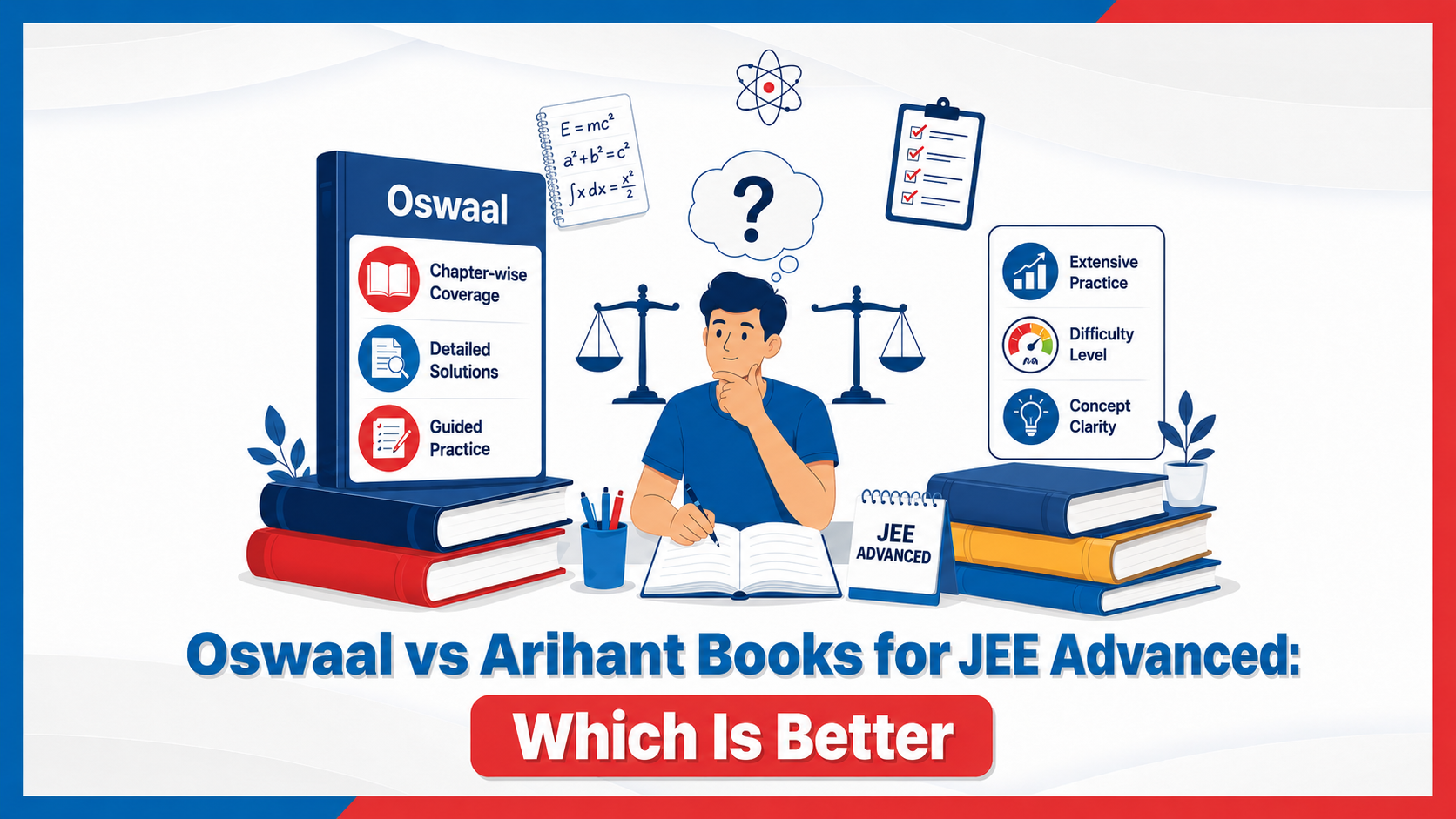
Which JEE Advanced books should you choose? Compare Oswaal and Arihant on difficulty, practice, solutions, and preparation style to pick the right one.

Showing 45 articles in this category.
Which JEE Advanced books should you choose? Compare Oswaal and Arihant on difficulty, practice, solutions, and preparation style to pick the right one.

Download the best free RBI Grade B 2027 study material, including notes, PDFs, previous year papers, mock tests, current affairs, and recommended resources for Prelims and Mains preparation.

Check the RE-NEET 2026 Result with the direct scorecard download link, step-by-step result checking process, AIR toppers list, state-wise toppers, percentile, and complete NEET UG 2026 counselling details. Stay updated with the latest NTA result, merit list, cutoff, and admission process.

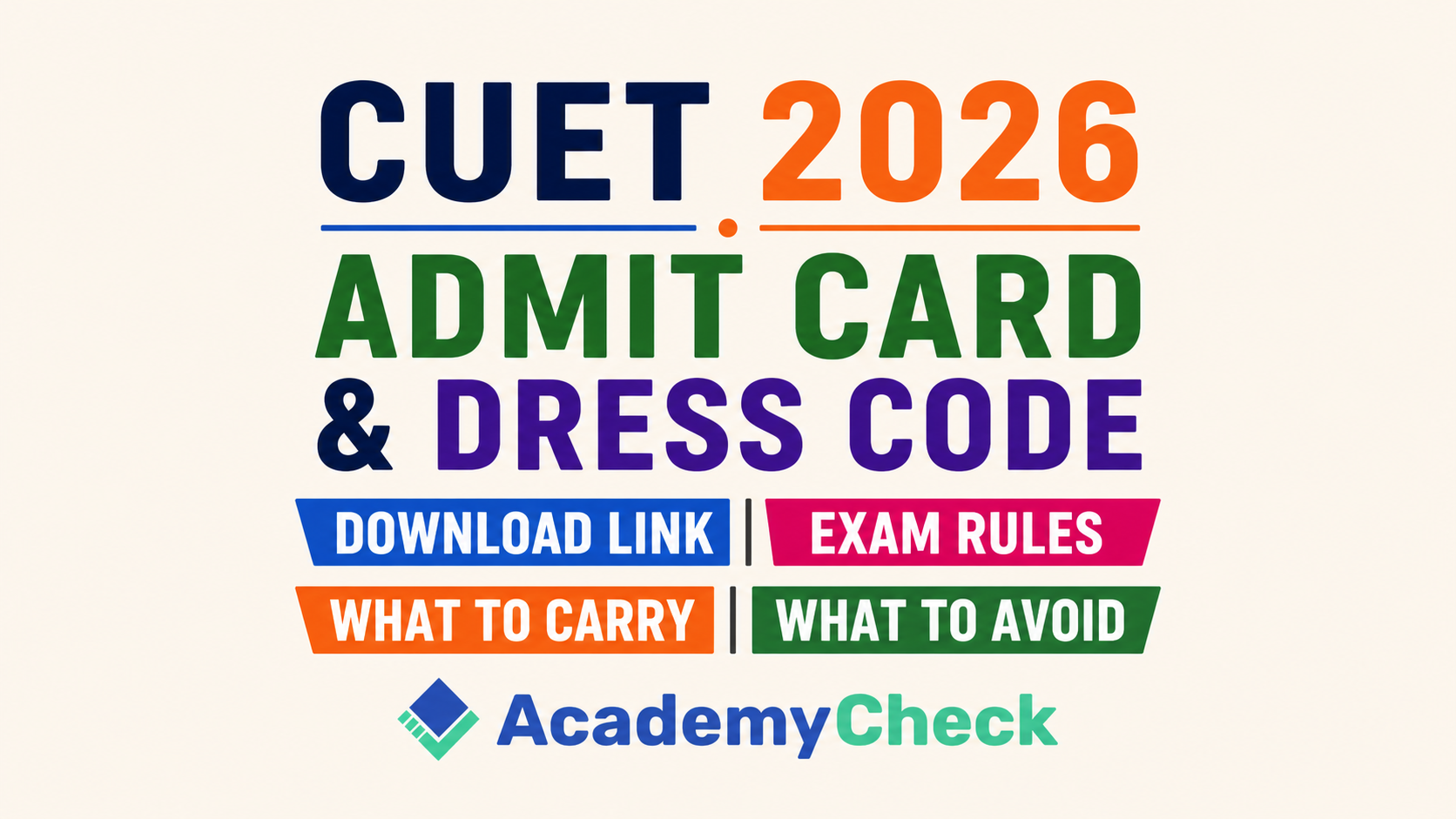
Get complete details on CUET 2026 admit card, exam day guidelines, dress code, and what to carry or avoid. Learn the step-by-step admit card download process, required documents, and important rules to ensure a smooth exam experience. Stay fully prepared with this quick and reliable CUET 2026 guide.

Get complete details about AILET 2027 including exam dates, syllabus, pattern, admit card, and preparation strategy in one place. This guide helps law aspirants understand key updates and plan effectively to secure admission in top law programs. Stay ahead with expert tips and accurate information for AILET success.

Get complete details about the IPMAT 2026 exam including date, pattern, marking scheme, and previous year toppers. This guide helps aspirants understand the exam structure, scoring trends, and key insights to boost preparation. Stay ahead with accurate and updated information for better exam strategy and performance.

Get complete details about IPMAT 2026 including exam date, admit card, exam pattern, syllabus, and preparation tips in one place. This guide covers everything from important instructions to topper insights, helping you plan effectively and boost your chances of getting into top IIMs like Indore and Rohtak.

Discover the **top 5 best books for UPSC preparation in 2026** from trusted publishers like **Oswaal Books, Arihant Publications, Disha Publication, S. Chand Publishing, and Spectrum Books**. This guide helps beginners choose the right UPSC study material for Prelims and Mains to build strong concepts and start their preparation effectively.

The GS Foundation Course by Leading IAS Coaching Institutes is designed to build a strong conceptual base for UPSC Civil Services aspirants. It covers core General Studies subjects with structured guidance, expert mentorship, and integrated preparation for Prelims and Mains. This course helps students develop analytical skills, clarity of concepts, and a strategic approach to crack the IAS examination.

This blog highlights the best platforms offering free NEET mock tests to help students practice effectively without any cost. It explains the importance of mock tests in improving speed, accuracy, and exam readiness. The blog also shares tips on how to use these tests strategically for better results.

Tagore Defence Academy is the best Airforce coaching in Kuchaman. It has proved itself as the best defense academy in all the defense exams like NDA, Air force, Navy, Army, Delhi Police and Paramilitary forces.

Download UPSC Mains 2024 Question Papers in PDF for General Studies (GS) 1, 2, 3, 4. Get insights into exam patterns, key topics, and preparation strategies. Access direct links to download the UPSC Mains 2024 question papers.
-172717158335424.jpg)
Explore the significance of choosing the right optional subject for the UPSC exam. Learn about the benefits of Public Administration, Sociology, and Political Science & International Relations. Discover how Abhyankar IAS Pune provides expert coaching for these optional subjects with comprehensive study material, mock tests, and personalized guidance.
-1726224072518954.jpg)
Discover the importance of Philosophy and Geography as optional subjects for the UPSC exam. Learn from expert guides like Dr. Tanu Jain for Philosophy and Tathastu ICS Delhi for Geography, helping you excel with a structured approach and comprehensive preparation.
-1726222909249204.jpg)
Discover the importance of optional subjects in the UPSC exam and why they are crucial for success. Learn about Avadh Ojha's History optional classes in Delhi, known for expert guidance and free mock tests to help students excel.
-1726221737661839.jpg)
Learn the importance of optional subjects in the UPSC exam. Eden IAS Prayagraj offers specialized courses in optional subjects like Ancient History, PSIR, History, and Anthropology with expert guidance from Apoorva Mam. Join the ₹1 test series every Sunday for comprehensive UPSC preparation.
-1726219730378795.jpg)
This blog post provides engaging and easy-to-understand strategies for UPSC aspirants to excel in their optional subjects for the Mains exam. It covers mastering core concepts, integrating current affairs, effective answer writing techniques, and managing stress, all presented in a friendly and relatable manner for young readers.
-1725946169335578.jpg)
Artificial Intelligence (AI) has rapidly transformed from a niche scientific concept into an integral part of modern life, touching virtually every aspect of technology and daily human experience. Initially, AI systems were limited to performing specific, rule-based tasks, but today, AI's capabilities have expanded far beyond those humble beginnings. Modern AI can read, write, translate languages, recognize images, understand complex contexts in text, audio, and video, and even make reasonable arguments for performing tasks. Alongside AI, robotics has advanced tremendously, with machines now capable of walking, identifying and moving objects, and performing various industrial and household tasks. This article delves into the key advancements in AI and robotics, highlighting how these technologies are reshaping our world.

Eden IAS Prayagraj launches the GS + CSAT 2025 Test Series, featuring 5 practice tests designed by expert faculties. Starting from 8th Sept 2024, join online or offline for just ₹1. AcademyCheck guides students on how to enroll and benefit from this valuable opportunity.
-1725454870382269.png)
Bhagat Singh – The Socialist Revolutionary in Modern History Bhagat Singh, a key figure in India's fight against British colonial rule, is celebrated for his role as a socialist revolutionary. Influenced by radical ideologies and driven by the trauma of events like the Jallianwala Bagh massacre, Singh's actions, including the 1929 Central Legislative Assembly bombing, marked a significant shift towards armed resistance. His martyrdom in 1931 and his revolutionary writings continue to inspire and underscore the diverse strategies of India's independence movement. For UPSC students, understanding Bhagat Singh's life and impact offers crucial insights into the complexities of modern Indian history.

This blog delves into the intricate relationships between women, caste, and reform in India, tracing the historical and contemporary struggles for gender and social justice. It highlights the efforts of reformers who challenged caste-based discrimination and gender inequality, and the ongoing need for transformative policies to empower marginalized communities. By examining key movements and legislative changes, this piece aims to inspire UPSC aspirants to understand the critical interplay of caste and gender in India's socio-political landscape.

India's journey after independence has been marked by significant political, economic, and social transformations. The adoption of the Constitution in 1950 established a democratic framework, while successive governments focused on economic development through planned industrialization and reforms. The nation has faced challenges, including social disparities and regional conflicts, but has also achieved notable progress in technology, education, and infrastructure. India's post-independence history is a testament to its resilience and ability to navigate complex challenges to build a diverse and vibrant democracy.

The lifelines of a national economy are the essential networks and systems that support the movement of goods, services, information, and people, including transportation, communication, energy supply, financial institutions, trade, human resources, and legal frameworks. These interconnected elements are crucial for economic growth and development, providing the infrastructure and support necessary for economic activities. Investing in and optimizing these lifelines is key to fostering sustainable economic development and improving the overall well-being of a nation.

Human geography explores the relationship between people and their environments, examining how human activities and cultural practices influence and are influenced by geographical spaces. Key concepts include population, cultural, economic, political, urban, social, and environmental geography. Understanding these fundamentals helps us address global challenges like urbanization, migration, and environmental change, promoting sustainable and equitable development.

The National Commission for Protection of Child Rights (NCPCR) is a pivotal institution in India, established in 2007 to safeguard and promote the rights of children. It monitors and evaluates policies, advises governments, addresses grievances, and raises public awareness on child rights issues. With a focus on protecting children from abuse, exploitation, and neglect, the NCPCR plays a crucial role in ensuring that children's rights are respected and upheld across the country.

The Bar Council of India (BCI) is the apex regulatory body for the legal profession and legal education in India, established under the Advocates Act, 1961. It oversees the enrolment of advocates, sets standards for legal education, and acts as a disciplinary authority for professional misconduct. The BCI plays a crucial role in maintaining the integrity and quality of the legal profession, promoting legal research and education, and advocating for legal reforms and access to justice.

Terrorism in India encompasses cross-border terrorism, domestic insurgencies, and violence driven by religious and ethnic tensions. It poses significant threats to national security, economic stability, and social harmony. The country faces challenges from both external actors and internal factors such as political disputes, socioeconomic inequalities, and extremist ideologies. India's counterterrorism efforts include a comprehensive legal framework, robust security agencies, international cooperation, and community engagement. Despite progress, ongoing vigilance and proactive measures are crucial to safeguard the nation.

The Law Commission of India is a non-statutory advisory body established in 1955 to recommend legal reforms and modernization of laws. Composed of legal experts, it reviews outdated laws, suggests new legislation, and advises the government on legal issues. The Commission has played a crucial role in shaping India's legal landscape by providing well-researched reports and recommendations on various issues, including criminal law, electoral reforms, and judicial efficiency. Its work ensures that India's legal system evolves to meet contemporary societal needs and international standards.

World constitutions serve as foundational legal documents that define the structure of government, outline the rights and duties of citizens, and establish the rule of law in a country. Despite diverse historical and cultural contexts, they commonly include provisions for the separation of powers, fundamental rights, and mechanisms for amendment. While the U.S. Constitution emphasizes brevity and individual rights, the Indian Constitution is known for its comprehensiveness and flexibility. The UK's unwritten constitution is based on statutes and conventions, while France's semi-presidential system balances executive and parliamentary powers. These constitutions reflect the unique governance philosophies and legal traditions of each country.

The National Commission for Women (NCW) is a statutory body in India established in 1992 to advocate for women's rights, address gender-based issues, and promote gender equality. The NCW investigates complaints, reviews laws, and provides policy recommendations to enhance women's legal protections. It also conducts awareness campaigns and offers support services for women in distress. Through its efforts, the NCW has played a crucial role in advancing women's rights and addressing challenges such as domestic violence, workplace harassment, and gender discrimination.