How to Learn a New Language by Yourself in a Fun Way
Learn a new language by yourself with simple daily activities like word games, movies, music, reading, and speaking practice. Build vocabulary and confidence through regular practice.
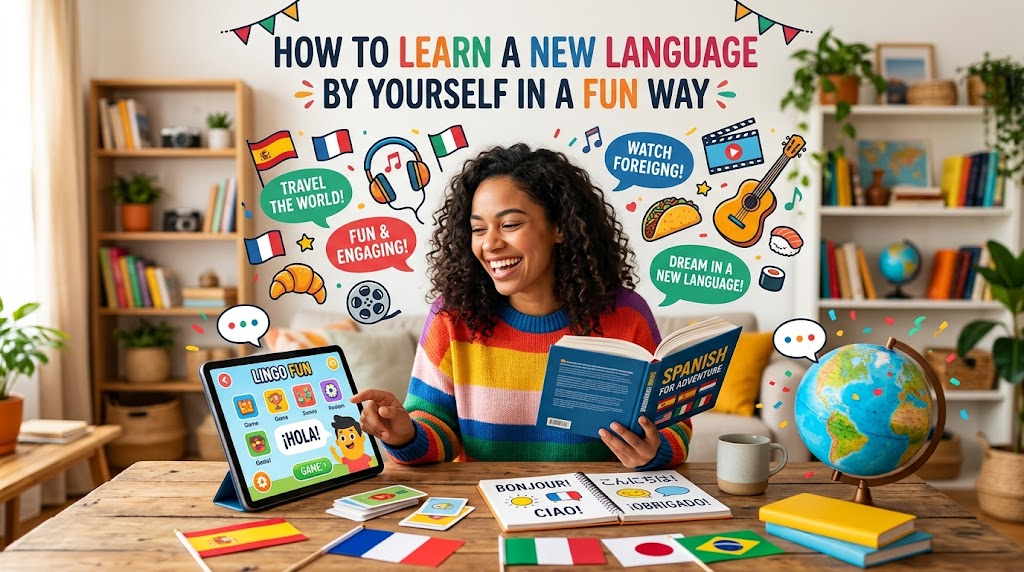
Learning a new language by yourself can feel difficult when you don’t have a teacher or someone to practice with every day. But you don’t always need to sit with a textbook for hours to improve your language skills.
You can learn through simple activities that you already enjoy, such as playing games, watching movies, listening to music, and reading.
The key is to make the language part of your daily routine.
Here are some simple and fun ways to learn a new language by yourself.
Fun Ways to Learn a New Language by Yourself
Play Word Games
Word games can be a fun way to learn new words and test your language skills at the same time. If you are learning Spanish, for example, you can try Elmot Wordle, a Spanish version of the popular Wordle game.
The puzzle updates daily with a new word, so you get a simple way to practice your vocabulary regularly. Try to understand the word after solving the puzzle and note down any words that are new to you. Over time, this can help you become more familiar with the language.
Watch Movies and Series
Watching movies and TV series in the language you are learning can help you become familiar with how people actually speak. Start with simple content and use subtitles if you need them.
Try to pay attention to common words, phrases, and the way sentences are spoken. You don’t need to understand every word at first. The goal is to slowly get used to hearing the language.
Listen to Music
Music is another easy way to include language practice in your daily routine. Find songs in the language you are learning and listen to them regularly.
You can also read the lyrics while listening to understand unfamiliar words. If you find a useful phrase, write it down and check its meaning. Repeatedly hearing the same words can also make them easier to remember.
Read Simple Content
Reading helps you learn how words are used in sentences. However, you don’t need to start with difficult books or long articles.
Start with short stories, simple news articles, social media posts, or children's content written in the language you are learning. When you find an unfamiliar word, check its meaning and try to understand how it is used in the sentence.
Keep a Vocabulary Journal
Keeping a vocabulary journal is a simple way to remember the new words you come across while learning a language. Write down the word, its meaning, and an example sentence so you can review it later.
You can also use online tools such as AI Word Solver to work on your vocabulary and find words when you need help.
Instead of only memorizing a long list of words, try using the new words in your own sentences. This makes it easier to remember them and understand how they work.
Practice Speaking Alone
You don’t always need another person to practice speaking a new language. You can practice by talking to yourself about simple things around you.
For example, describe what you are doing, explain your plans for the day, or talk about something you recently watched. This helps you practice forming sentences and makes speaking feel more natural over time.
Turn Everyday Activities Into Language Practice
Your daily routine gives you many opportunities to practice a language. You can name objects around your home, read product labels, think about your plans in the new language, or try to translate simple thoughts in your head.
For example, while cooking, try naming the ingredients and kitchen items in the language you are learning. Small activities like these can give you regular practice without needing to set aside a separate study session.
Use Word Solvers and Puzzle Tools as Learning Aids
Word solvers and puzzle tools can also be useful when you want to improve your vocabulary. Instead of using them only to get an answer, you can use them to discover new words and understand how they are formed.
For example, NYT Solvers provides different word tools for popular word games. You can use these tools to explore words, check possible combinations, and learn vocabulary while solving puzzles.
The important thing is to treat these tools as learning aids rather than simply using them to find answers. When you discover a new word, take a moment to learn its meaning and remember it for future use.
Ending Thoughts
Learning a new language by yourself becomes easier when you make it part of your everyday life. Playing word games, watching movies, listening to music, reading simple content, and practicing speaking can give you regular exposure to the language without making learning feel like a boring task.
You don’t need to do everything at once. Start with activities you enjoy and slowly build a daily habit. With regular practice, you can improve your vocabulary, understand the language better, and become more comfortable using it on your own.