CLAT Coaching with the Best Study Material 2028: What Students Get
Preparing for CLAT 2028 requires more than textbooks and practice papers. Explore the study materials students can get through CLAT coaching programmes, including subject-wise books, mock tests, current affairs resources, legal updates, digital notes, and revision tools. This guide looks at resources offered by LegalEdge and Law Prep Tutorial to help students understand what a structured CLAT preparation package can include.
Hallo, Aspirants!
Preparing for the Common Law Admission Test (CLAT) involves more than reading textbooks and memorising information. Students need different learning resources to understand the syllabus, practise questions, follow current affairs, and evaluate their preparation before the examination.
CLAT coaching programmes generally combine several types of study materials, including printed books, digital notes, mock tests, and subject-specific resources. However, the number and format of these materials vary between programmes.
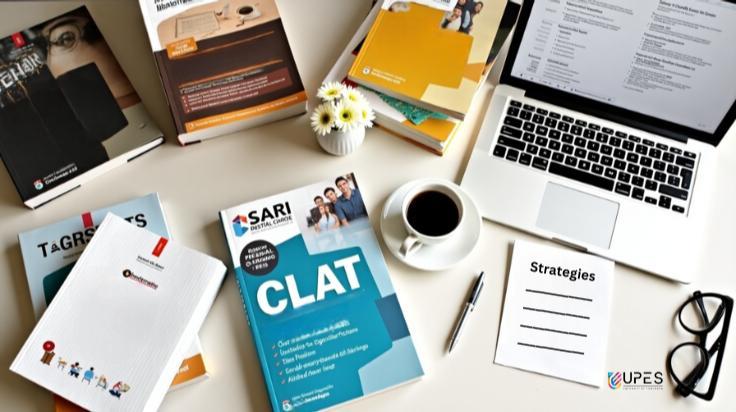
In my research, I looked at the study materials and programme details from LegalEdge by Toprankers and Law Prep Tutorial for comparison. Their resources provide useful examples of how coaching institutes organise learning materials for CLAT aspirants.
Building a Strong Foundation Across All Five CLAT Sections
CLAT preparation covers five main sections, each requiring a different set of skills. Study materials should therefore provide subject-specific explanations, examples, and exercises rather than treating the entire syllabus as one general subject.
Here is what students generally need to cover:
CLAT Section | Learning Focus |
|---|---|
English Language | Reading comprehension, vocabulary in context, and understanding arguments |
Current Affairs and General Knowledge | National and international developments, general knowledge, and important events |
Legal Reasoning | Legal principles, passages, and applying rules to given situations |
Logical Reasoning | Arguments, assumptions, conclusions, and critical thinking |
Quantitative Techniques | Basic mathematical concepts, calculations, and data interpretation |
Printed books remain useful for building this foundation. They allow students to study concepts in a structured order and work through examples before attempting more challenging questions.
For instance, LegalEdge uses Rankers' Study Material (RSM), a collection of learning resources organised around CLAT subjects. Their published Achievers study material documentation includes:
Essentials materials.
RSM Classroom materials.
RSM Homework materials.
Subject-specific learning resources.
The programme's general CLAT information also refers to more than 20 RSM booklets containing study content and practice questions.
Law Prep Tutorial takes a similar subject-based approach through its printed books. Its CLAT 2028 Target Batch lists 40+ printed preparation books covering all five sections.
These books include:
Concept explanations.
Subject-wise learning materials.
Examples and illustrations.
Practice questions.
LPT also provides recorded explanations of study modules, allowing students to revisit lessons after studying the corresponding material.
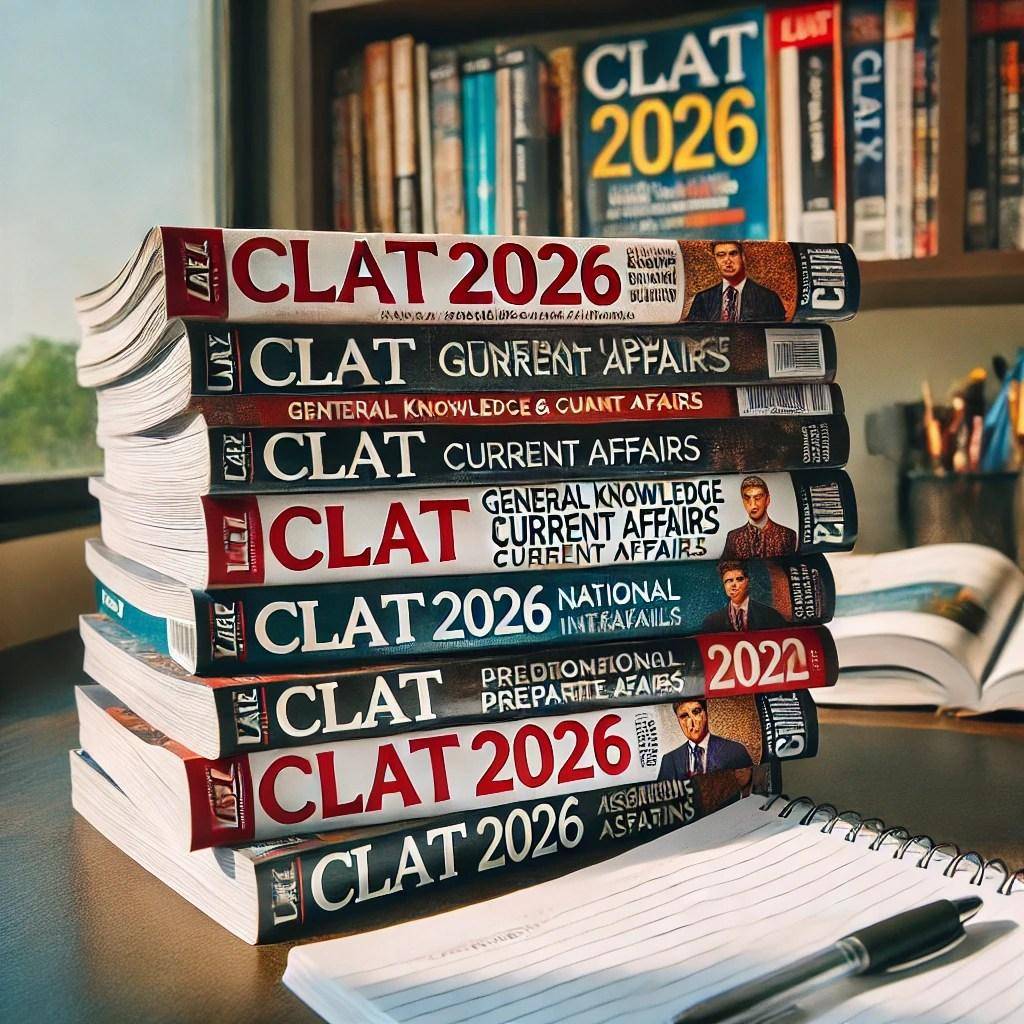
The number of books is only one part of the picture. I recommend looking at whether the materials explain difficult concepts clearly, cover the relevant sections, and provide enough exercises to reinforce what students learn.
Getting Enough Practice Before CLAT
Reading explanations can help students understand a topic, but applying that knowledge requires regular practice. This is particularly important for CLAT, where students must interpret passages, evaluate arguments, and answer questions within a limited time.
Practice materials generally include three important components:
Topic-wise questions: Help students concentrate on specific concepts or skills.
Sectional exercises: Allow students to practise questions from one CLAT section.
Previous-year papers: Familiarise students with the examination format and question patterns.
LegalEdge's published CLAT programme information mentions:
Practice Material | Quantity |
|---|---|
Practice questions | 10,000+ |
Previous-year papers | Available |
Sectional tests | 100+ |
Topic-wise tests | 100+ |
The practice questions are included in its Rankers' Study Material resources. They give students opportunities to work through different subjects and question formats during preparation.
Law Prep Tutorial provides practice opportunities through its printed books, digital notes, and online testing resources.
Their CLAT 2028 Target Batch lists:
200+ topic-wise and sectional tests.
Practice exercises within its printed preparation books.
Additional digital practice content.
These resources allow students to focus on individual topics before attempting more comprehensive examination exercises.
One useful approach is to complete practice questions immediately after studying a topic. Students can then review their answers and identify concepts that need further attention.
Previous-year papers can be introduced as part of this process. Rather than attempting them only near the examination, students can use them periodically to understand how their subject knowledge translates into actual question-solving.
Mock Tests Are Only Useful When Students Learn from Their Mistakes
Mock tests help students become familiar with the CLAT examination experience. They also provide an opportunity to practise time management, assess accuracy, and identify weaknesses across different sections.
However, completing a mock test is only part of the process. Reviewing the answers and understanding mistakes are equally important.
What types of mock tests should students look for?
Test type | Purpose |
|---|---|
Full-length mocks | Simulate the complete examination |
Sectional tests | Evaluate performance in individual sections |
Topic-wise tests | Identify strengths and weaknesses in specific topics |
Both LegalEdge and Law Prep Tutorial publish mock test facilities for their CLAT programmes.
LegalEdge
Its published CLAT 2027–2028 programme information lists:
55+ CLAT full-length mocks.
50+ mocks for other law entrance examinations.
100+ sectional tests.
100+ topic-wise tests.
The programme also mentions several evaluation features:
Detailed solutions.
Video explanations.
All India rankings and percentile information.
Sectional scores and accuracy tracking.
Topic-wise performance analysis.
Difficulty analysis.
Law Prep Tutorial
Their CLAT 2028 Target Batch lists:
80+ full-length mock tests.
200+ topic-wise and sectional tests.
Additional evaluation features include:
All India Ranking System.
AI-based performance tracking.
Speed-versus-accuracy tracker.
Video analysis of tests and practice sheets.
Mock error-focused classes.
Mock test strategy sessions.
These features help students understand more than their final scores. For example, a student may discover that they understand a passage but spend too much time answering its questions. Another may finish quickly but make frequent mistakes due to inaccurate reading.
After each mock test, I recommend following a simple review process:
Identify incorrect answers.
Check the explanations and understand the correct reasoning.
Note questions that took too long.
Revisit topics where mistakes occur repeatedly.
Apply the lessons to the next practice session.
Mock quantities can differ between programmes and batches. Students should check the exact package they intend to purchase rather than assuming that every facility advertised on an institute's website is automatically included.
Keeping Up with Current Affairs and Legal Developments
Current Affairs and General Knowledge require consistent attention throughout CLAT preparation. Students need to follow important developments and understand the background behind major national, international, and legal issues.

Dedicated publications can make this process more organised by collecting relevant information in one place.
Current Affairs Resources
LegalEdge provides several resources for following current developments:
Resource | What it covers |
|---|---|
The CLATPost | Monthly current affairs |
GK Fiesta | Weekly general knowledge quizzes |
Most Important Articles (MIA) | Selected newspaper articles for daily reading |
The CLATPost provides a recurring source of current affairs material, while GK Fiesta gives students opportunities to test their general knowledge through regular quizzes.
Most Important Articles also encourages students to read selected newspaper content, helping them develop familiarity with longer passages and important issues.
Law Prep Tutorial includes CLAT Express in its published CLAT 2028 Target Batch materials. Its current affairs resources cover areas such as:
National developments.
International developments.
Legal current affairs.
Economic developments.
Social issues.
The separate CLAT Express product information also describes MCQs, practice questions, expert notes, timelines, and case studies.
Legal Knowledge and Developments
Students also need resources that focus specifically on legal issues rather than general news.
LegalEdge provides LegaLE, a publication covering static and current legal knowledge. Its Achievers study material documentation describes this resource as part of its legal knowledge preparation materials.
Law Prep Tutorial includes two additional resources:
Legal Express: Covers important judgements, legal amendments, constitutional developments, and contemporary legal issues.
Monthly Legal Article Compilation: Collects legal articles and contemporary issues for further reading and analysis.
These resources can help students become familiar with legal terminology and developments that may appear in CLAT-related reading materials.
In my view, reading current affairs publications is more useful when students understand the context behind the news instead of memorising every headline. They should try to identify:
What happened and why it matters.
The background behind an important event.
Its connection to legal, political, or social developments.
Relevant facts that may help them remember the issue.
Following current affairs regularly is generally more manageable than trying to cover several months of news shortly before the examination.
Revising Without Starting from Scratch Every Time
As the examination approaches, students need ways to revisit previously studied topics without repeatedly reading entire textbooks.

Digital notes, recorded explanations, and revision tools can make this process easier. They also provide alternatives for students who prefer studying through online platforms.
E-books and Digital Notes
LegalEdge's published digital learning resources include:
Digital Rankers' Study Material.
CLATPost and LegaLE publications.
Mock PDFs.
Online practice resources.
An e-study portal.
These resources complement its printed study materials and provide access to learning and practice content through its digital platform. Law Prep Tutorial's CLAT 2028 Target Batch lists 100+ e-books and digital notes through its LMS.
The digital resources include:
Topic-wise notes.
Legal updates.
Current affairs materials.
Revision resources.
Additional practice content.
Having both printed and digital materials gives students different ways to access their preparation resources. They can use printed books for structured study and digital notes when they want to review specific topics.
Flashcards and Recorded Explanations
Revision does not always require reading an entire chapter again. Shorter resources can help students recall information and identify what they still need to learn.
Law Prep Tutorial lists flashcards among its study resources. These can be used to review:
Important facts.
Formulas.
Concepts.
Legal principles.
Information that requires quick recall.
LPT also provides recorded explanations of study modules, recordings of live classes, and a short concept video library.
These resources are particularly useful when students want to revisit a difficult lesson or clarify a concept without attending the same live session again.
The most effective revision method depends on individual learning habits. Some students may prefer handwritten notes, while others find digital materials or short videos more convenient. What matters is using these resources consistently instead of allowing them to accumulate without being reviewed.
Making Study Materials Work as Part of a Consistent Routine
Having access to numerous books, tests, and digital resources does not automatically guarantee effective preparation. Students still need a routine that allows them to use those materials without becoming overwhelmed.
Here are some practical ways to organise them:
Activity Preparation | Suggested approach |
|---|---|
Learning concepts | Start with subject-wise books and notes |
Practising questions | Complete topic-wise exercises after studying each topic |
Improving accuracy | Review incorrect answers and read explanations |
Building exam readiness | Attempt full-length mocks regularly |
Following current affairs | Read important updates throughout the preparation period |
Revising | Use flashcards, digital notes, and recorded explanations |
Students can also maintain a simple mistake log. Whenever they answer a question incorrectly, they can record the topic, the reason for the mistake, and what they need to review.
This can help them recognise recurring problems instead of repeatedly making the same mistakes.
Before enrolling in a coaching programme, I recommend checking the exact materials included in the chosen package.
A few things worth confirming are:
Whether printed books are included in the course fee.
How long students can access digital materials.
Whether mock tests cover CLAT specifically or other entrance examinations as well.
Whether test explanations and performance reports are available.
Whether additional publications or study kits require separate purchases.
For example, Law Prep Tutorial also offers a separate CLAT Game Changer Kit. Its advertised materials should not be confused with the facilities automatically included in the CLAT 2028 Target Batch.
Similarly, LegalEdge publishes information across different CLAT programmes and batches. Students should verify the inclusions of their selected programme rather than combining features from separate course listings.
Students exploring different preparation options can also visit AcademyCheck's Course Comparison page to review available programmes and their published details.
A well-organised study package can make CLAT preparation easier to follow, but its value ultimately depends on how students use it. Books help build understanding, practice questions develop application, mock tests reveal weaknesses, and revision resources reinforce earlier learning. Using these materials consistently gives students a more structured approach to preparing for CLAT 2028.
Note: If any coaching institute finds their details to be incorrect, please accept our apologies. You can share the correct information along with the blog link on our WhatsApp number: 8287604941.
Enroll through AcademyCheck to access the best discounts and complete coaching details such as address, fees, and upcoming batch dates.
Visit the website: AcademyCheck
Student Support: 01169270926
Academy Support: 8287604941
PG/Hostel support: 9319397093
For more such informative articles and details, please visit our StudySpace profile, and don't forget to like and comment.