How to Learn Cursive Handwriting: A Step-by-Step Guide
Learn cursive handwriting step by step with easy practice methods. Master basic strokes, cursive letters, alphabet, word connections, worksheets, and neat writing skills.
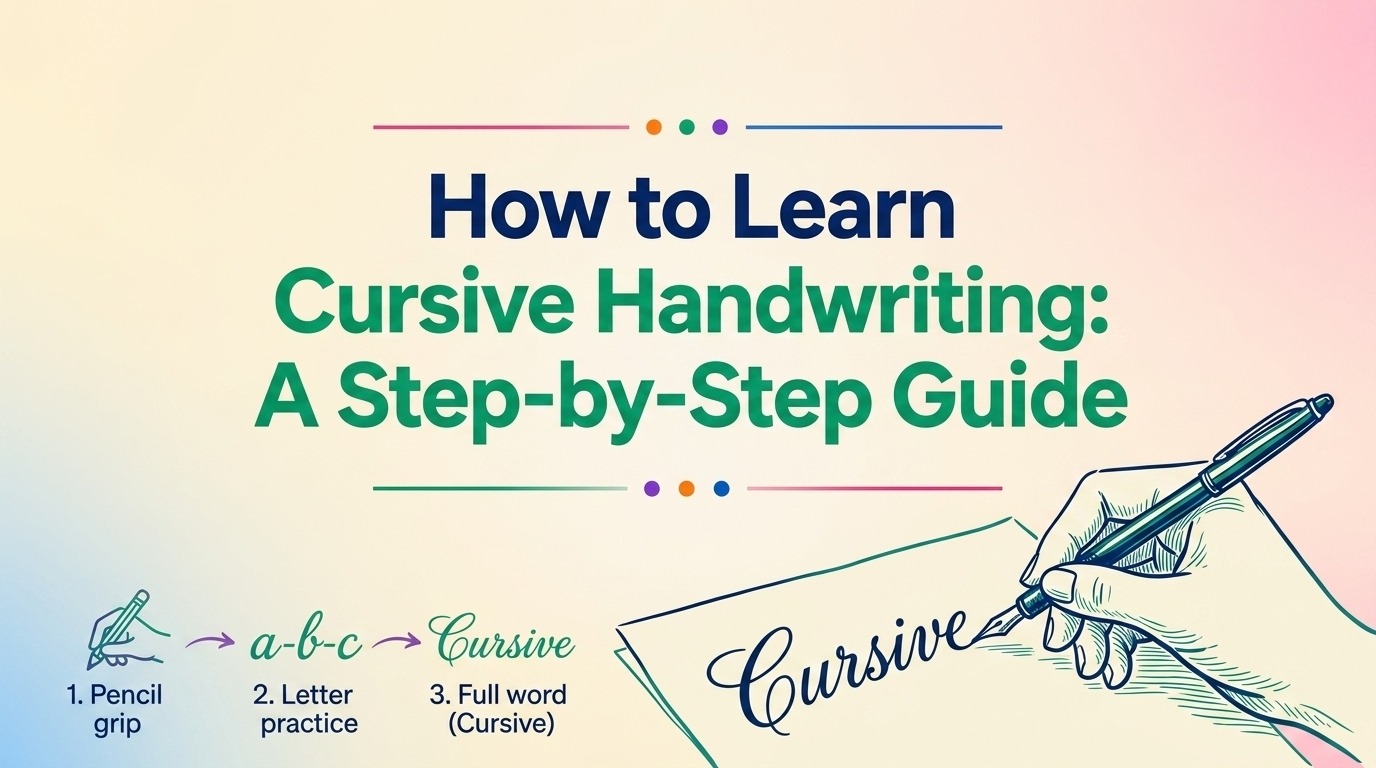
Learning cursive handwriting is a valuable skill that helps improve your handwriting, build fine motor skills, and write with greater speed and confidence. Although typing is more common today, cursive remains an important skill for students, adults, and anyone who wants neat, connected handwriting.
The good news is that learning cursive doesn't have to be difficult. By practicing the right strokes, letter formations, and connections step by step, you can develop smooth and consistent handwriting over time.
In this guide, you'll learn how to learn cursive handwriting from the basics to writing complete words and sentences. You'll also discover helpful tips, printable cursive worksheets, and practice techniques to make learning easier and more enjoyable.
What Is Cursive Handwriting?
Cursive handwriting is a style of writing where letters are connected in a smooth, flowing motion instead of being written separately like print. This connected writing style makes handwriting faster, more natural, and often more elegant.
Unlike printed letters, cursive uses continuous strokes to join letters together, helping improve writing rhythm, consistency, and fluency. With regular practice, it also becomes easier to write longer words and sentences without lifting your pen as often.
Today, cursive handwriting is widely used for personal notes, signatures, journaling, and classroom learning. Whether you're a child learning for the first time or an adult improving your penmanship, developing cursive writing skills can help you create neat, legible, and confident handwriting.
Why Learning Cursive Handwriting Is Still Important
In today's digital world, keyboards and touchscreens have become part of everyday life. However, cursive handwriting continues to be a valuable skill that offers benefits far beyond writing on paper.
Learning cursive writing helps you develop better handwriting habits, improve coordination, and write more smoothly and efficiently. It also encourages focus, patience, and consistent practice skills that are useful in both school and everyday life.
Whether you're a student, parent, teacher, or adult learner, mastering cursive can improve your writing experience while making it easier to read, take notes, sign documents, and express yourself with confidence. Below are some of the biggest benefits of learning cursive handwriting.
How to Learn Cursive Handwriting (Step-by-Step)

Learning cursive is much easier when you follow a clear, structured approach. Instead of trying to memorize every letter at once, build your skills one step at a time. Each stage strengthens your muscle memory and prepares you for the next, making your handwriting smoother and more consistent.
Step 1: Learn the Basic Cursive Strokes
Every cursive letter is built from a few simple strokes. Before practicing the alphabet, spend time mastering these basic cursive strokes. A strong foundation will make letter formation much easier.
Undercurve: A smooth upward stroke that begins at the baseline and curves gently upward.
Overcurve: A curved stroke that starts from the top and flows downward.
Downcurve: A downward stroke that creates the main body of many cursive letters.
Loops: Tall and lower loops are used in letters like l, h, f, g, and y.
Ovals: Rounded shapes that form letters such as a, c, d, o, and g.
Connecting strokes: Short joining lines that link one letter to the next without lifting the pen.
Practice these strokes repeatedly until they feel natural before moving on to individual letters.
Step 2: Practice Cursive Alphabet
After learning the basic strokes, the next step is to practice the cursive alphabet. Start with lowercase letters, as they appear most often in everyday writing and are generally easier to master before moving on to uppercase letters.
To make learning easier, practice lowercase letters in groups that share similar shapes and strokes, often called letter families. For example, letters like c, a, d, g, and o all begin with similar rounded movements. This approach helps you recognize patterns, develop muscle memory, and improve letter formation more quickly.
Once you're comfortable with lowercase letters, continue practicing the uppercase cursive letters. Repeating each letter several times helps strengthen muscle memory, improve consistency, and develop neat, legible handwriting. With regular practice, you'll be able to write the complete cursive alphabet smoothly and confidently.
Step 3: Practice Connecting Letters
The defining feature of cursive handwriting is the smooth connection between letters. After learning individual letters, practice joining them together without lifting your pen.
Start with simple two-letter combinations such as an, in, on, at, and it. As your confidence grows, practice common letter combinations that appear frequently in everyday words. Smooth, consistent connections will make your handwriting faster and more natural.
Step 4: Write Simple Words
When you're comfortable connecting letters, begin writing short and familiar words. Two- and three-letter words are ideal because they let you focus on letter formation without feeling overwhelmed.
Repeat common word patterns several times to improve rhythm, spacing, and consistency. As your confidence increases, gradually move on to longer words with different letter combinations.
Step 5: Write Sentences
The next step is to combine your skills by writing complete sentences. Copying simple sentences is an excellent way to improve letter size, spacing, alignment, and writing flow.
Write slowly at first and focus on keeping your letters evenly spaced with a consistent slant. As accuracy improves, your writing speed will naturally increase without sacrificing neatness.
Step 7: Practice Paragraphs Daily
The best way to master cursive handwriting is through regular practice. Spend 15–20 minutes each day writing short paragraphs, journal entries, quotes, or passages from your favorite book.
Daily practice strengthens muscle memory, improves consistency, and helps you develop a smooth, natural writing style. Over time, you'll notice better letter formation, increased writing speed, and more confident, legible handwriting.
Daily Cursive Practice Routine for Beginners
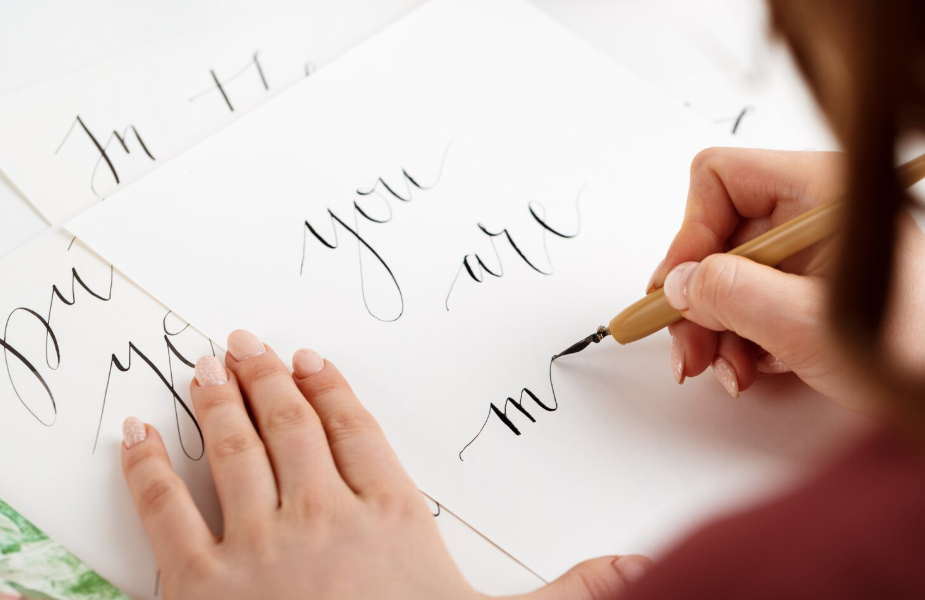
Practicing cursive handwriting for just 15–20 minutes a day can significantly improve your writing skills. Consistency is more important than practicing for long hours.
Start with basic strokes, then practice the cursive letters. Next, write simple words and short sentences while focusing on proper letter formation, spacing, and smooth connections. With regular daily practice, your handwriting will become neater, faster, and more confident.
Common Mistakes Beginners Make
When learning cursive handwriting, it's normal to make mistakes. Identifying and correcting them early will help you improve faster and develop neat, consistent handwriting.
Skipping the basic strokes before practicing letters.
Writing too quickly instead of focusing on accuracy.
Using incorrect letter formation or stroke order.
Inconsistent letter size and spacing between words.
Lifting the pen too often, which breaks the natural flow of cursive.
Holding the pen too tightly causes hand fatigue and uneven writing.
Practicing irregularly instead of following a daily routine.
Avoiding these common mistakes and practicing consistently will help you build smooth, legible, and confident cursive handwriting.
Tips to Improve Your Cursive Handwriting Faster
The fastest way to improve cursive handwriting is to practice consistently. Spend 15–20 minutes each day practicing the cursive alphabet, words, and short sentences to strengthen muscle memory and build confidence.
Use cursive worksheets to learn proper letter formation, stroke order, and spacing. It's better to write slowly and accurately at first. As your control improves, your writing speed will naturally increase.
Finally, review your handwriting regularly and pay attention to letters or connections that need improvement. With patience, consistent practice, and the right techniques, you'll develop smoother, neater, and more confident cursive handwriting over time.
Conclusion
Learning cursive handwriting is a journey that becomes easier with patience, consistency, and the right practice methods. By mastering the basic strokes, practicing the cursive alphabet, connecting letters, and writing words and sentences regularly, you'll gradually develop smooth, neat, and confident handwriting.
Remember, progress comes from daily practice, not perfection. Use cursive worksheets to strengthen your skills, focus on proper letter formation, and review your handwriting regularly to track your improvement.
Whether you're learning cursive for school, teaching a child, or improving your own penmanship, following this step-by-step guide will help you build a strong foundation. Keep practicing, stay consistent, and enjoy the process of mastering beautiful cursive handwriting.